
Accessory Dwelling Unit (ADU) sizes fall into three standard categories: small (150 to 400 square feet), medium (400 to 749 square feet), and large (750 to 1,200 square feet). The footprint you choose dictates your total construction cost, available layout options, and required permits. In California, keeping your ADU under 750 square feet completely exempts you from municipal development impact fees. To protect your budget and maximize your property value, you must design your unit around these specific regulatory breakpoints. This guide explains how to navigate state and local zoning laws, avoid unnecessary municipal fees, and select the exact dimensions for your backyard.
How ADU Size Impacts Your Construction Budget
An Accessory Dwelling Unit functions as an independent home. Even small units require permanent provisions for living, sleeping, cooking, and sanitation. Because they are full residential spaces, they face strict building codes.
Your total square footage acts as the primary dial for your entire project budget. State and local laws use the size of your unit to determine how close you can build to property lines, whether you must install fire sprinklers, and what municipal fees you owe. A poor size choice can easily stall your project during the city planning phase.
Size also dictates the daily comfort of your tenants or family members. Balancing the physical limits of your yard with the construction cost per square foot ensures a strong return on investment. The goal is to build enough livable space while avoiding expensive regulatory triggers.
Comparing Small, Medium, and Large ADU Sizes
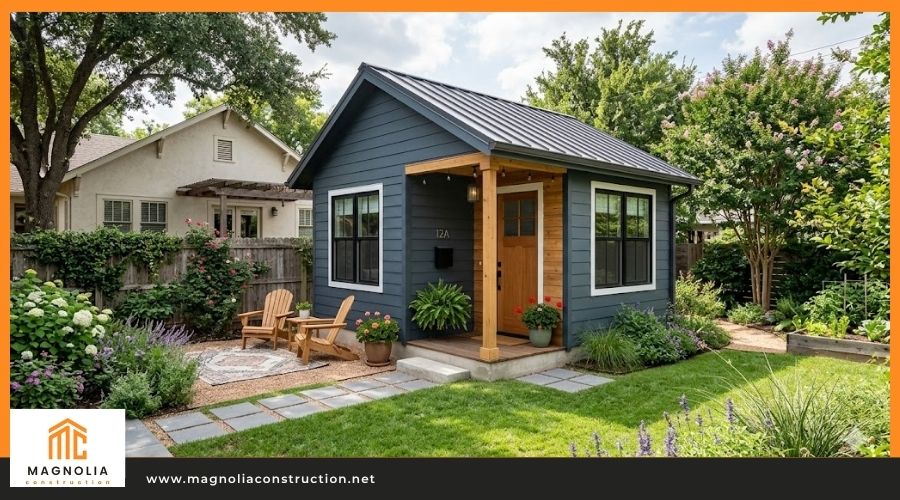
Selecting the right footprint requires understanding how square footage translates to daily use and upfront expenses. Here is a breakdown of the three main size categories to help you evaluate your options:
Small ADUs: 150 to 400 Square Feet
Small units feel similar to a studio apartment or a detached hotel suite. They work exceptionally well for single occupants or short-term guests. Review the operational details of this compact footprint to see if it meets your needs:
- Best Uses: Home offices, guest houses, pool houses, or short-term rentals where permitted.
- Typical Cost Range: $75,000 to $150,000, depending on site conditions, utility upgrades, and local labor rates.
- Layout Styles: Open studio floor plans utilizing multi-functional furniture and efficient storage.
Here is what you can expect when building a small unit:
| Pros | Cons |
| Zero development impact fees | Very limited storage and living space |
| Quickest construction timeline | Lower monthly rental income potential |
| Fits into nearly any backyard | Difficult to fit full-sized home appliances |
Medium ADUs: 400 to 749 Square Feet
This category is the most practical choice for a standard residential lot. It offers a strong balance between functional living space and budget protection. Review the core specifications of this popular size range:
- Best Uses: Long-term rentals, independent housing for aging parents, or small starter homes.
- Average Cost: $150,000 to $260,000 based on material selections and site prep.
- Layout Styles: Spacious one-bedroom plans or compact two-bedroom configurations with standard kitchens.
Here is what you can expect when building a medium unit:
| Pros | Cons |
| Exempt from municipal impact fees | Requires careful layout planning to avoid clutter |
| High rental demand from single tenants and couples | Higher total material costs than a studio unit |
| Low average construction cost per square foot | Takes up a significant portion of suburban yards |
Large ADUs: 750 to 1,200 Square Feet
Large units deliver a full-scale residential experience. They easily accommodate couples, roommates, or growing families. Examine the financial implications of building a maximum-sized secondary dwelling:
- Best Uses: Permanent multi-generational housing or high-yield multi-bedroom rental properties.
- Average Cost: $260,000 to $450,000 or more, depending on your finish quality and labor costs.
- Layout Styles: Full two-bedroom or three-bedroom floor plans with multiple bathrooms and dedicated dining areas.
Here is what you can expect when building a large unit:
| Pros | Cons |
| Generates the highest long-term rental income | Subject to expensive proportional impact fees |
| Fits full-sized residential appliances and laundry | Demands strict adherence to zoning and height limits |
| Highly practical for long-term family living | Highest overall upfront construction costs |
How State Laws and Local Zoning Affect ADU Dimensions
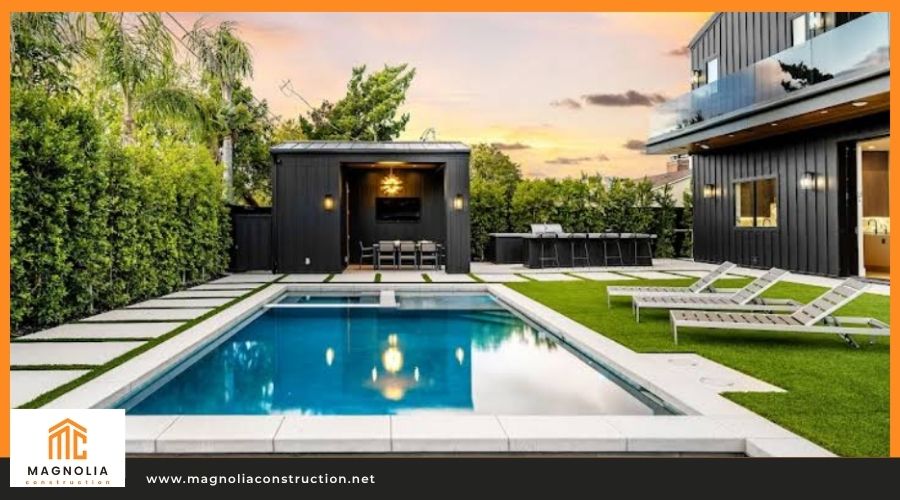
Building departments enforce strict thresholds that directly impact your options. Review these critical legal boundaries before you approve your architectural plans:
- The 750-Square-Foot Rule: ADUs that are 750 square feet or smaller are exempt from local development impact fees. Staying under this threshold saves you thousands of dollars in upfront municipal costs.
- The 800-Square-Foot Safe Harbor: The California Department of Housing and Community Development requires local agencies to permit detached ADUs up to 800 square feet. This state law applies even when local lot coverage or open space standards would normally block the project, provided you meet safety codes.
- The 5 Percent Attached Rule: Some cities limit attached ADU sizes based on a percentage of your primary home’s square footage. However, state law overrides local codes to guarantee you can build an attached ADU up to at least 800 square feet.
- The 5-Foot Fire Boundary: Building too close to a property line triggers advanced fire-safety requirements. You will likely need fire-rated walls and restricted window openings if you build near the edge of your lot.
- School District Assessments: ADUs and JADUs that are 500 square feet or smaller are exempt from school impact fees. If you build larger, you face localized assessments based on your total square footage.
How to Choose the Right ADU Square Footage for Your Property
Finding the perfect size means analyzing your financial goals against your physical backyard constraints. Follow this systematic approach to pick the exact dimensions for your project:
- Define the Primary Goal: Decide whether you need to maximize monthly rental income from tenants or prioritize accessibility and comfort for aging family members.
- Measure Your Usable Space: Check your property lines. Account for standard four-foot rear and side setbacks, along with any site-specific easements.
- Check the Main House Size: Calculate the exact livable square footage of your primary home if you plan to build an attached unit.
- Analyze the Local Rental Market: Research what local renters pay for studios versus two-bedroom homes. This data reveals if building a larger unit justifies the extra construction costs.
- Calculate the Fee Thresholds: Keep your architectural design at 749 square feet or below if your strict goal is to avoid paying local development impact fees entirely.
Design Layout Tips to Maximize Small ADU Spaces
Smart architectural choices can make a compact layout feel much larger than its physical footprint. Implement these practical design techniques to improve the livability of your unit:
- Raise the Ceilings: Use vaulted ceilings and high window placements to draw the eye upward. This prevents tight living rooms from feeling cramped.
- Install Pocket Doors: Slide doors directly into the walls. This reclaims the valuable floor space that traditional swinging doors waste.
- Optimize Kitchen Layouts: Use L-shaped or single-wall kitchen designs. Install tall cabinets to maximize your counter space and vertical storage.
- Incorporate Outdoor Living: Add a covered patio, deck, or folding glass wall to connect the indoor living space to the outdoors.
- Build Dedicated Storage: Utilize built-in closets, under-stair storage compartments, and functional furniture to manage daily clutter.
How Expert ADU Contractors Streamline the Build Process
Navigating engineering requirements and zoning rules requires technical knowledge. One misstep can lead to costly planning delays. Rely on experienced ADU contractors to manage the heavy lifting:
- Site Feasibility Testing: Contractors evaluate soil stability, locate underground utility lines, and confirm your actual property setbacks before you break ground.
- Navigating City Hall: Experienced builders handle the permit process, submit plan-check corrections, and secure your final certificate of occupancy.
- Utility Capacity Management: Professionals audit your existing electrical panel and plumbing lines to determine if they can handle the extra load of a second home.
- Value Engineering Layouts: Builders adjust architectural plans to keep you within your cost thresholds while maintaining strict structural integrity.
- Complete Construction Oversight: Hiring an expert ensures your framing, plumbing, electrical, and finish work comply fully with the residential building code.
Finalizing Your ADU Size and Construction Strategy
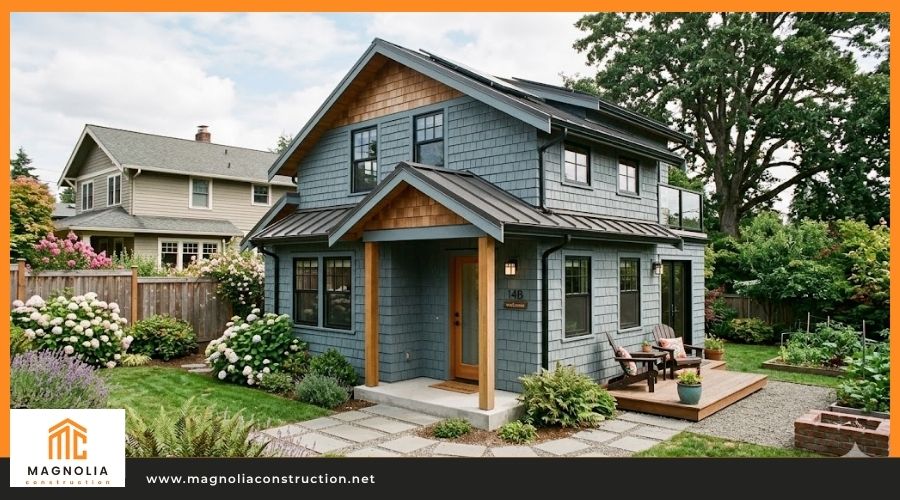
Choosing the correct unit size requires balancing your financial goals, local zoning laws, and available yard space. Pushing your design to the absolute maximum limit of your property can trigger heavy municipal impact fees and strict fire-safety requirements. These triggers drain your construction budget quickly. By matching your square footage to key regulatory breakpoints, like the 750-square-foot threshold, you minimize administrative delays and protect your profit margins.
Take the time to map your property constraints, calculate your potential rental yields, and design a footprint that delivers reliable returns. Magnolia Construction is a premier general contractor serving the San Diego area, specializing in high-end home remodeling, backyard remodeling, ADU construction, and comprehensive roofing services for local homeowners.
Frequently Asked Questions
What is the best size for a backyard ADU?
The most practical size for most residential lots is between 500 and 749 square feet. This range offers enough space for a highly functional one- or two-bedroom layout with full-sized amenities. Crucially, it remains small enough to bypass municipal development impact fees completely.
Does an 800-sq-ft ADU trigger impact fees?
Yes. In California, ADUs larger than 750 square feet face proportional local development impact fees. A 750-square-foot ADU or smaller is exempt from these fees under state law. If you build an 800-square-foot unit, your city will calculate and charge proportional infrastructure impact fees based on the specific size of your structure.
What is the maximum size for a JADU?
The maximum legal size for a Junior Accessory Dwelling Unit (JADU) is 500 square feet. A JADU must be constructed entirely within the existing walls of a primary residence. It must also include an efficient kitchen and possess its own distinct exterior entrance.
How does ADU size affect construction cost per foot?
The construction cost per square foot actually decreases as the unit size increases. Smaller units cost more per foot because expensive infrastructure elements—like kitchens, bathrooms, plumbing, and utility connections—are concentrated into a much smaller total footprint.
Is a two-story ADU better for small lots?
A two-story design works well for small lots because it doubles your livable square footage without expanding the building footprint across your yard. However, vertical builds must comply with stricter municipal height limits and generally incur higher structural engineering and framing costs.